ASUS has just unveiled its new ASUS Ascent QN10, a state-of-the-art mini PC that is one of the first to feature Qualcomm’s Snapdragon X2 Elite SoC.
This device is set to compete directly in the advanced productivity, AI, and content creation sectors, offering high energy efficiency in this form factor with Windows 11 on ARM. The design features a metal chassis for superior thermal performance; the QN10 promises to maximize the performance of Qualcomm’s new silicon without the noise or heat issues of traditional x86 systems.
It remains to be seen whether the price point can attract the general public—something Windows ARM products have not yet achieved. For now, the main draw is the use of on-device AI models, a feature with limited demand.

ASUS Ascent QN10 and its specifications
This new compact computer features the powerful Snapdragon X2 Elite processor, which stands out for its 18 cores— 12 Prime cores up to 4.7 GHz and 6 high-performance cores up to 3.4 GHz, its Adreno X2-90 GPU, and an NPU capable of reaching 80 TOPS for local AI tasks. A device that stands out for its ultra-compact metal chassis and its ability to handle heavy workloads, such as 4K video editing or intensive multitasking, while maintaining minimal power consumption.
Notable features include support for LPDDR5X-8533 / 9600 memory up to 32 GB. For storage, it features twoNVMe Gen4 and Gen5 2280 slots that ensure high transfer speeds.
Other features
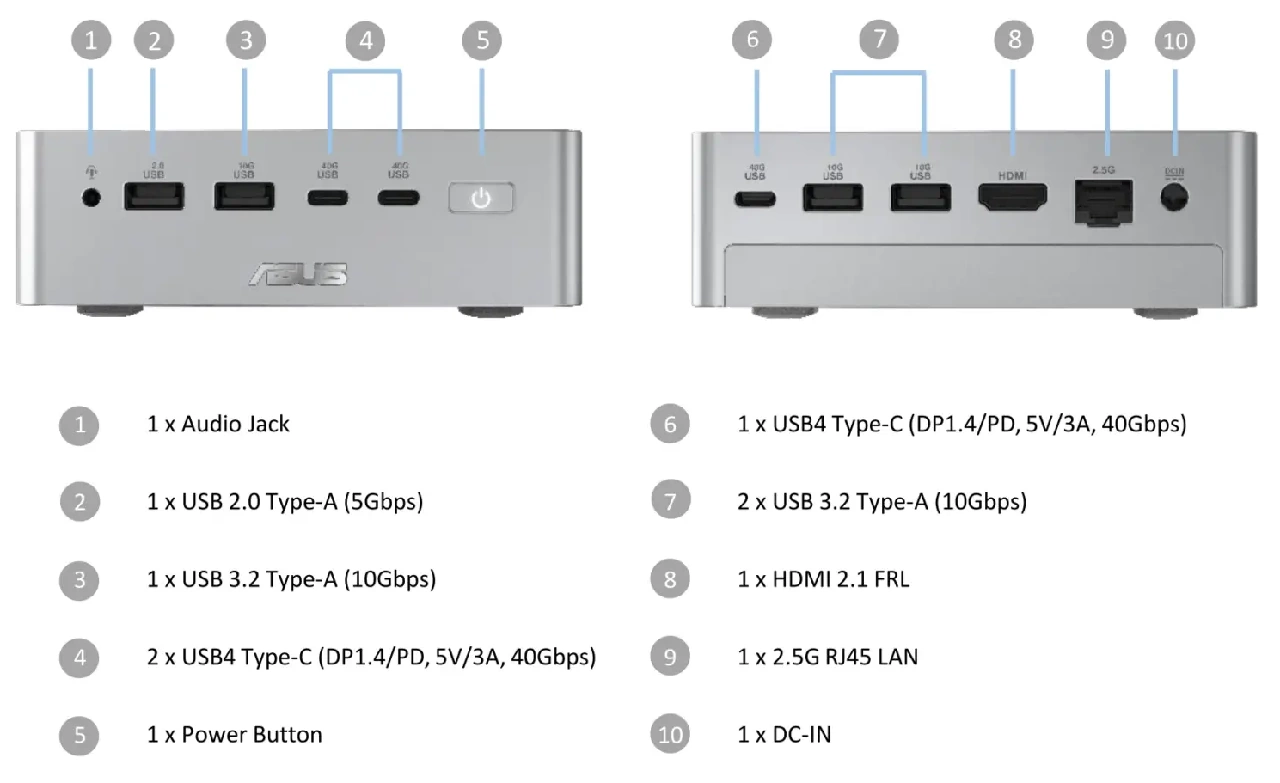
In terms of connectivity, the ASUS Ascent QN10 is fully equipped with WiFi 7, Bluetooth 5.4, and a 2.5GB network adapter. It features several USB4 ports with speeds up to 40 Gbps, HDMI 2.1 video outputs , and USB-C DisplayPort, allowing you to connect up to three 4K HDR displays simultaneously.
The dimensions are 130 x 130 x 39.96 mm, and it weighs 720 grams. The default operating system is Windows 11 ARM, and there is no option to install Linux.
Price and availability
- The ASUS Ascent QN10 will be available soon at retailers such as Amazon, the price is expected to be around $1,299, but will depend on the configuration.